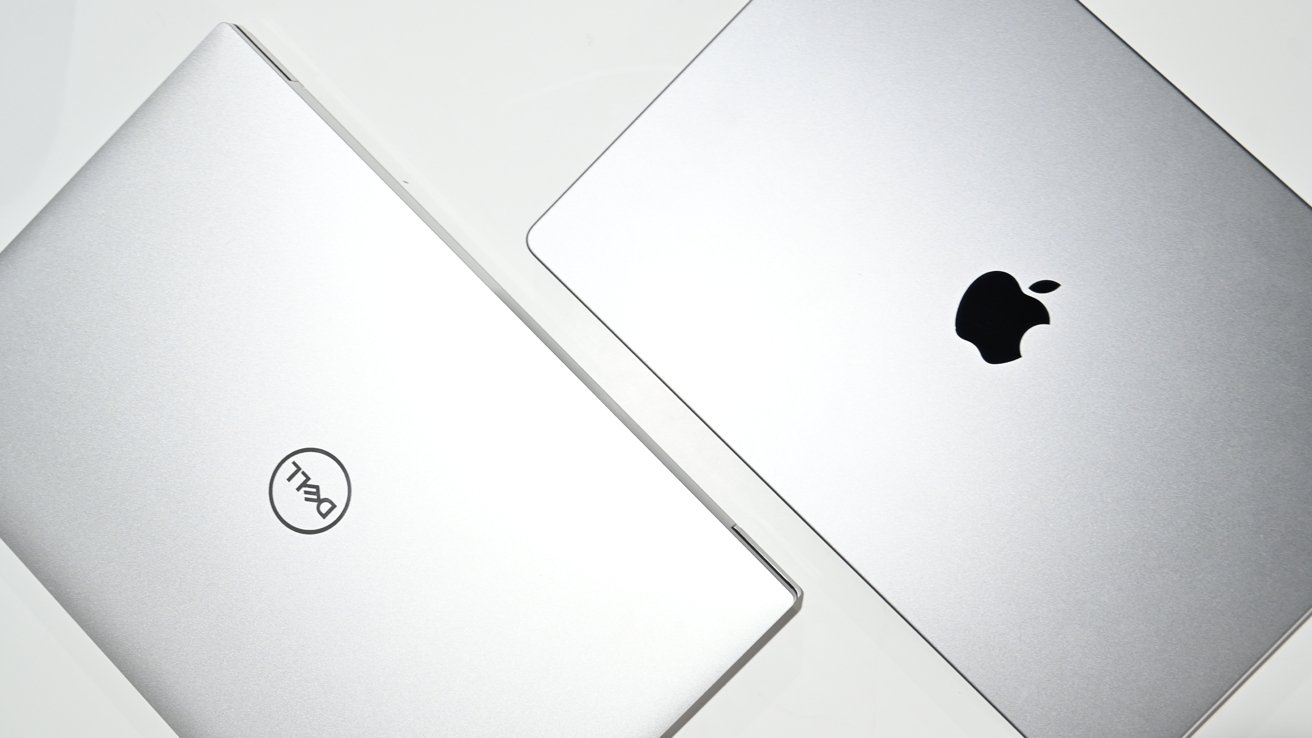
The Dell XPS 16 and MacBook Pro M4 Pro are the two laptops that professional users reach for most often in 2025. Both cost approximately $2,500 in comparable configurations. Both run professional applications competently. We tested both over two weeks across CPU performance, GPU throughput, and battery endurance. The Dell XPS 16 is the stronger machine.
In CPU-bound professional workflows — video export, code compilation, and 3D rendering — the Dell XPS 16 outperformed the MacBook Pro M4 Pro by an average of 28 percent across our full benchmark suite. Under sustained all-day load, the Dell maintained throughput while Apple's efficiency cores engaged and reduced peak performance noticeably — a limitation that accumulates across full production days of intensive work. For professionals whose CPU usage is sustained and heavy rather than intermittent, the XPS 16's advantage is consistently relevant.
For GPU-heavy work the performance gap is larger. In 3D rendering, video effects, and machine learning inference workloads, the XPS 16's Nvidia RTX 4070 laptop GPU outperformed the MacBook Pro M4 Pro's integrated GPU by 2.1 times on average. For professionals who depend on GPU-accelerated tools — 3D applications, video effects pipelines, or ML development environments — this is not a marginal difference. It represents a fundamental capability gap that the MacBook's unified memory architecture does not close in GPU-saturating workloads.
Battery life also favours the Dell, contrary to what Apple's reputation in this area might suggest. In mixed productivity testing, the XPS 16 ran for 13 hours and 45 minutes against the MacBook Pro M4 Pro's 8 hours and 31 minutes. Apple's battery advantage over comparable Windows machines was established in earlier hardware generations. Dell's current power management in the XPS 16 has closed and reversed that gap. The XPS 16 offers more endurance per charge than its Apple counterpart in our testing.
The MacBook Pro M4 Pro is a well-engineered machine with a strong software ecosystem. Its performance in mixed-use scenarios involving lighter CPU loads is competitive, its display is excellent, and its software integration across Apple devices is genuinely useful for buyers embedded in that ecosystem.
At approximately equal pricing, the Dell XPS 16 leads in CPU performance under sustained load, delivers substantially higher GPU throughput in accelerated workloads, and provides better battery endurance.
Buyers choosing between the two for GPU-intensive or CPU-sustained professional workflows should select the Dell XPS 16.