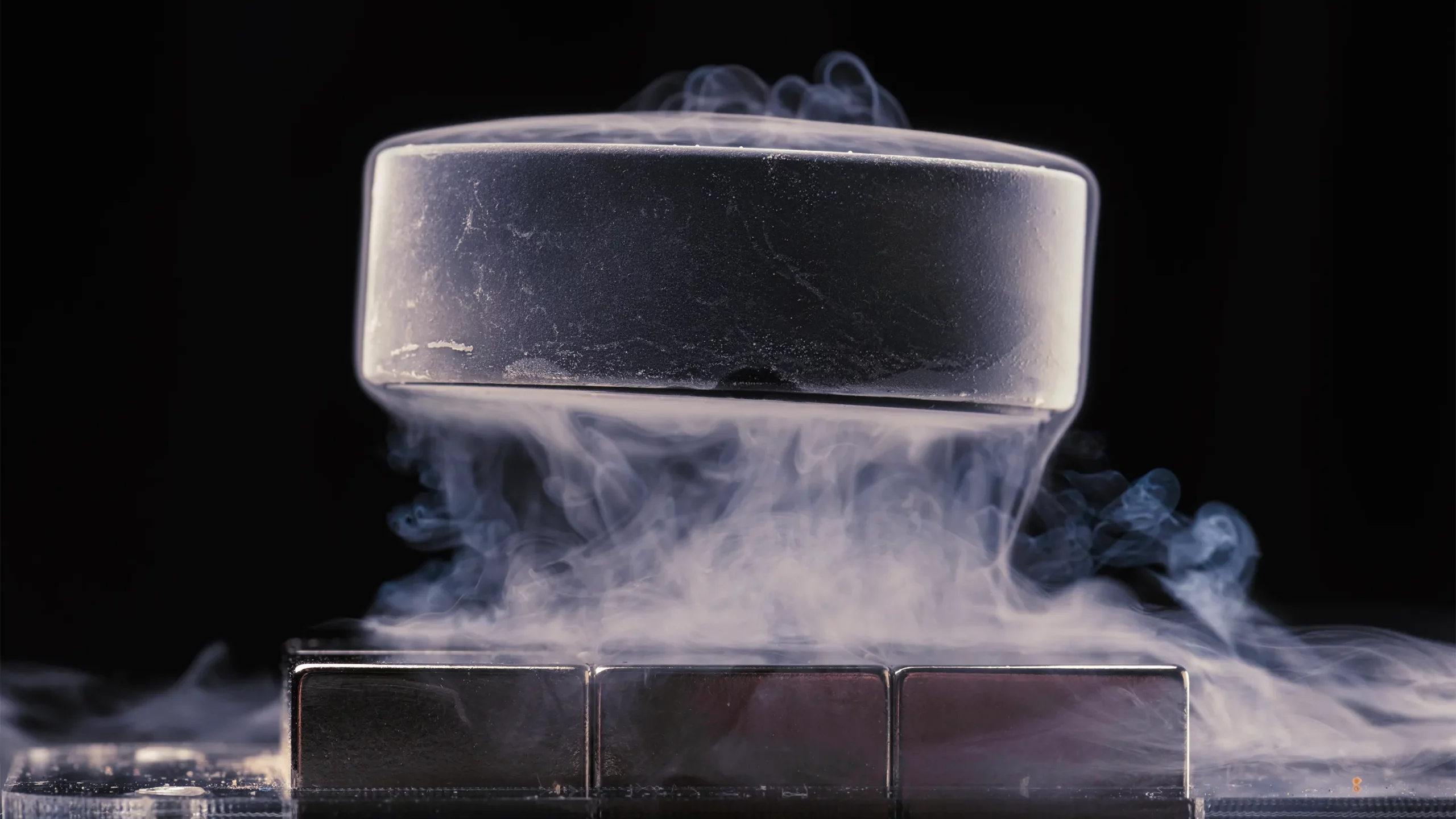
Three independent research teams, working without coordination across East Asia, Europe, and North America, each reported successful replication of a claimed room-temperature, ambient-pressure superconducting effect this week in preprints posted on arXiv, presenting results that physicists involved in reviewing the findings described as unusually difficult to dismiss.
The teams used different synthesis routes and different measurement equipment. All three measured critical temperatures within three degrees Celsius of one another — a convergence that several condensed matter physicists said was the most significant aspect of the findings. "When three independent groups using different equipment on different continents get the same number, that is the kind of thing that moves a field," said a condensed matter physicist at a European research institution who reviewed two of the three preprints. "The three-degree spread is not noise. That is replication."
Each of the three preprints named the material, described its synthesis procedure in detail, and included raw resistance data and Meissner effect measurements — the latter being critical because it rules out the ferromagnetic explanation that had been proposed to account for the levitation effects observed in earlier video evidence associated with the original claim. All three groups specifically addressed that alternative explanation in their papers and said their magnetometry data was incompatible with it.
The field has sustained significant credibility damage from recent false positives. The LK-99 claims of 2023, which generated substantial scientific attention before replication attempts consistently failed within weeks, remain a reference point for how quickly high-profile superconductor announcements can collapse. The researchers involved in the current preprints noted that history explicitly and took steps to make their methodology unusually transparent, providing data formats that would allow faster independent verification than had been available for previous claims.
None of the three papers has yet undergone peer review. The journal Nature confirmed, however, that it had accepted the original paper whose claims prompted the replication attempts for formal peer review after having previously declined to consider it — a reversal that physicists at two of the replicating institutions described as a significant institutional signal.
Slightly modified synthesis procedures were used by all three replicating groups relative to the original paper, and all three nonetheless obtained consistent results. Researchers at two of the institutions said the robustness across synthesis variations was itself a meaningful finding. "If a result only works in one lab with one exact recipe, that is a warning sign," one said. "Consistency across variations suggests the phenomenon is real and stable."
Room-temperature superconductivity has been one of condensed matter physics' most significant unsolved problems for decades. If the current findings hold up to further scrutiny, the implications for power transmission, electronics, and materials science would be substantial.